


Criminal Law
Criminal Law – Strong Defense, Fair Prosecution
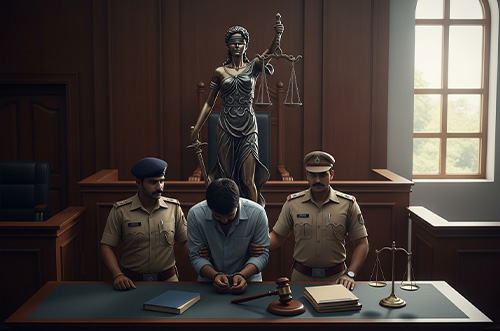
Criminal cases can impact your life and reputation. Our firm offers dedicated defense as well as prosecution support in all types of criminal matters. From bail applications to trial representation, we ensure a strong and strategic approach before every level of court.
Key Highlights
- Defense in all criminal trials and appeals
- Assistance in FIR registration and quashing
- Bail and anticipatory bail applications
- Representation before Sessions Court, High Court, and Supreme Court
With ADVOCARE PARTNERS, you are never alone in your fight for justice.
FAQ
Criminal Law Cases (India)
1. What are Criminal Cases?
Criminal cases involve acts or omissions that are considered offences against the State or society, even if committed against an individual. The purpose is to punish the offender and maintain law and order.
2. Which laws govern criminal cases in India?
Criminal matters are primarily governed by three key laws:
- Bharatiya Nyaya Sanhita, 2023 (BNS)- defines offences and punishments (replacing IPC, 1860).
- Bharatiya Nagarik Suraksha Sanhita, 2023 (BNSS)- governs criminal procedure (replacing CrPC, 1973).
- Bharatiya Sakshya Adhiniyam, 2023 (BSA)- governs rules of evidence (replacing Indian Evidence Act, 1872).
3. What are the main types of criminal offences?
- Cognizable offences: Serious offences where police can arrest without a warrant (e.g., murder, rape, theft).
- Non-cognizable offences: Less serious offences where police need a court’s permission to investigate (e.g., defamation, public nuisance).
- Bailable and Non-bailable offences: Depending on whether bail is a right or at court’s discretion.
4. How does a criminal case start?
A criminal case generally begins with:
- Filing of an FIR (First Information Report) under Section 173 BNSS (formerly 154 CrPC) for cognizable offences.
- For non-cognizable offences, a complaint is filed before a Magistrate under Section 210 BNSS (formerly 190 CrPC).
5. What happens after an FIR is lodged?
The police:
- Investigate the matter, collect evidence, and record statements.
- File a charge sheet (if evidence supports the case) or a closure report (if not).
- The court then takes cognizance and proceeds with the trial.
6. What are the stages of a criminal trial?
- Filing of charge sheet / complaint
- Framing of charges
- Prosecution evidence
- Defence evidence
- Arguments
- Judgment and sentencing
7. What are the rights of an accused person?
- Right to legal representation (Article 22, Constitution)
- Right to bail (in bailable offences)
- Right to fair trial and speedy justice
- Right against self-incrimination
- Right to appeal in higher courts
8. What is the difference between bail, anticipatory bail, and default bail?
- Regular Bail: Granted after arrest.
- Anticipatory Bail (Section 482 BNSS / old 438 CrPC): Granted before arrest in apprehension of arrest.
- Default Bail: Granted when the police fail to file a charge sheet within the prescribed time (60/90 days).
9. Can a criminal case be settled between parties?
Only certain compoundable offences (like hurt, defamation, or trespass) can be settled with court permission under Section 359 BNSS (old 320 CrPC). Serious offences (like murder, rape) are non-compoundable and cannot be privately settled.
10. What are the types of punishments under criminal law?
Under Bharatiya Nyaya Sanhita, 2023, punishments include:
- Death penalty
- Life imprisonment
- Imprisonment (rigorous/simple)
- Fine
Forfeiture of property